‘Urban Flow’ – Designing Sustainable Transport Solutions for Melbourne
Service Design
Project overview
Role: UX/UI Designer, Team Lead (team project)
Tools: Miro, Figma, Adobe Illustrator
Timeline: [insert duration]
Project Type: University Major Project
Melbourne’s public transport system faces growing challenges, including congestion, limited connectivity, and unequal access for vulnerable populations. Urban Flow aimed to create a more sustainable, efficient, and user-friendly commuting experience by integrating digital and physical transport solutions.
The problem*
Melbourne’s rapid population growth and urban sprawl have strained its public transport system. Congested roads encourage private vehicle use, increasing stress, commute times, and environmental impact. Meanwhile, low-frequency services, inconsistent schedules, and unsafe infrastructure make commuting challenging, particularly for elderly residents, university students, and non-drivers. Users often feel frustrated due to unclear route guidance and the lack of real-time information.
Our central question was: How might we create an urban environment that prioritizes sustainable transport while improving the daily commuting experience for a diverse range of users?
Research & empathy
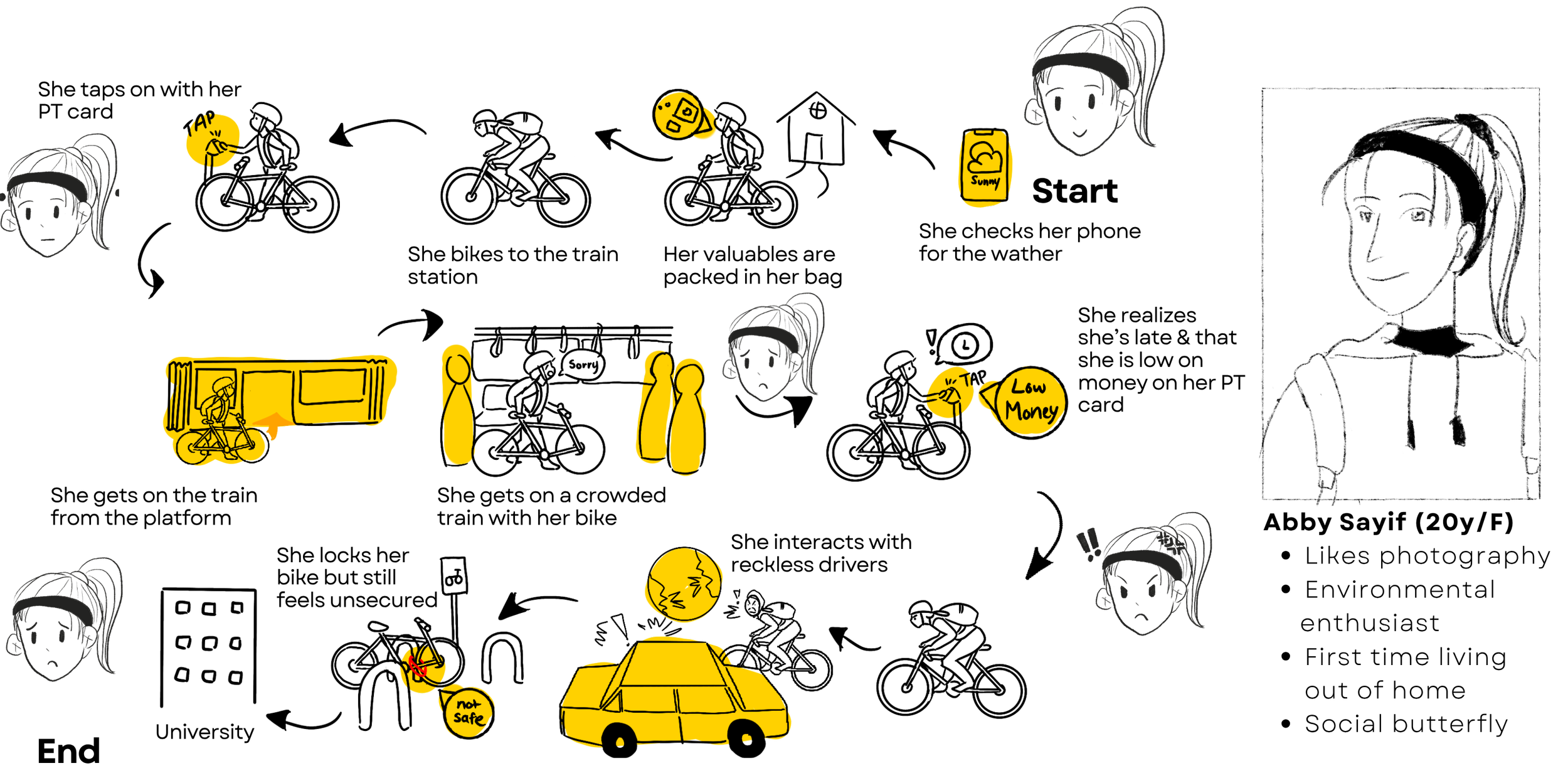
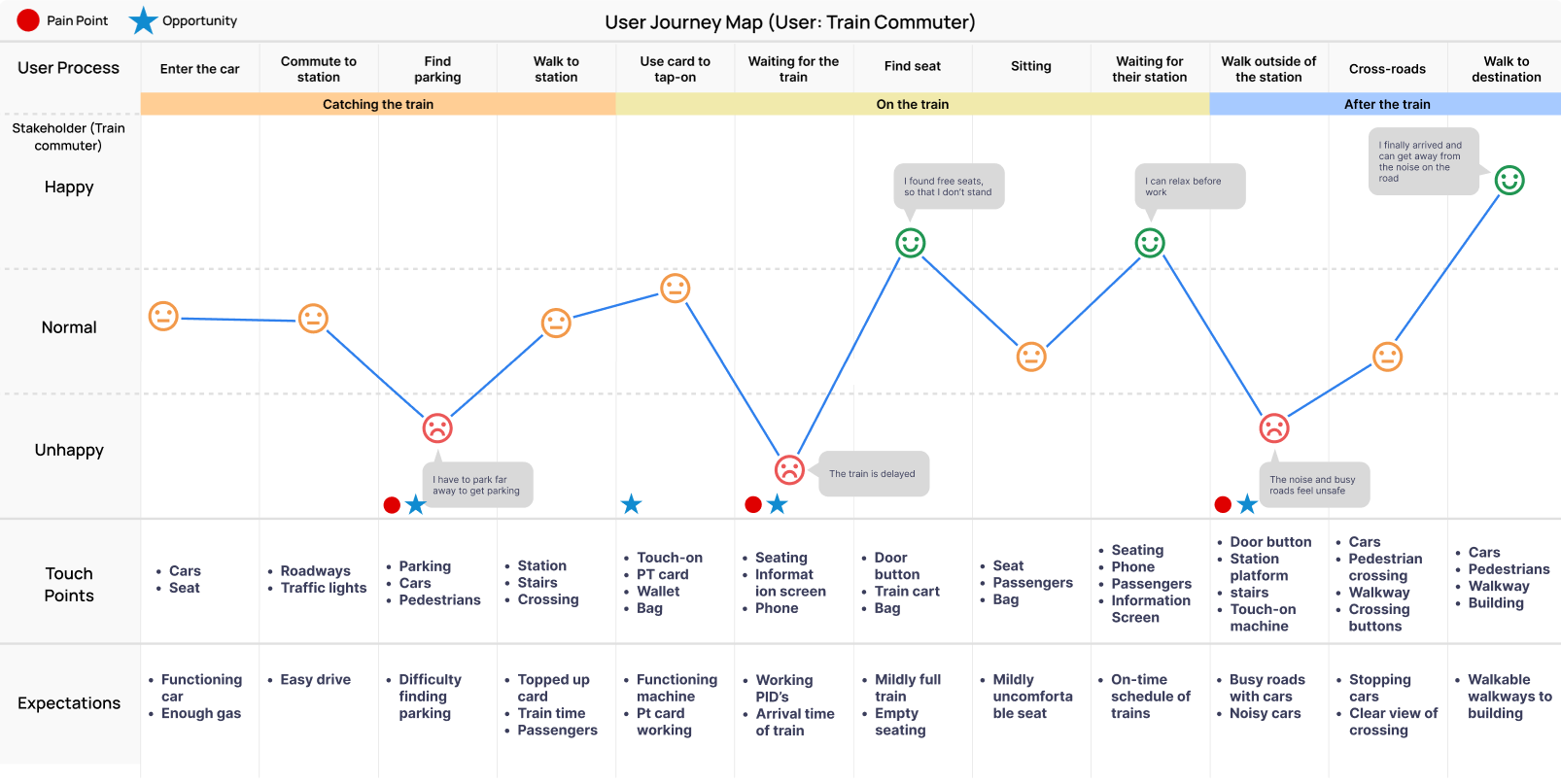
We started by mapping the commuting experiences of different user groups to understand their pain points. We developed four key personas:
George Kenneth (45, Suburban Commuter): Car-dependent, frustrated by traffic, values punctuality.
Friya Hart (36, Bus Driver): Navigates city routes daily, concerned about safety and operational efficiency.
Abby Sayif (20, University Student): Relies on cycling and public transport, struggles with inconsistent schedules.
Lidia Smith (72, Retiree): Limited mobility, relies on public transport, requires simple and accessible interfaces.
Through research, journey mapping, and empathy exercises, we identified common pain points: delayed or overcrowded transport, confusing schedules, unsafe routes for cyclists and pedestrians, and poor integration of transport modes. Car users also faced traffic congestion that increased stress and reduced personal time.
Exploration & ideation
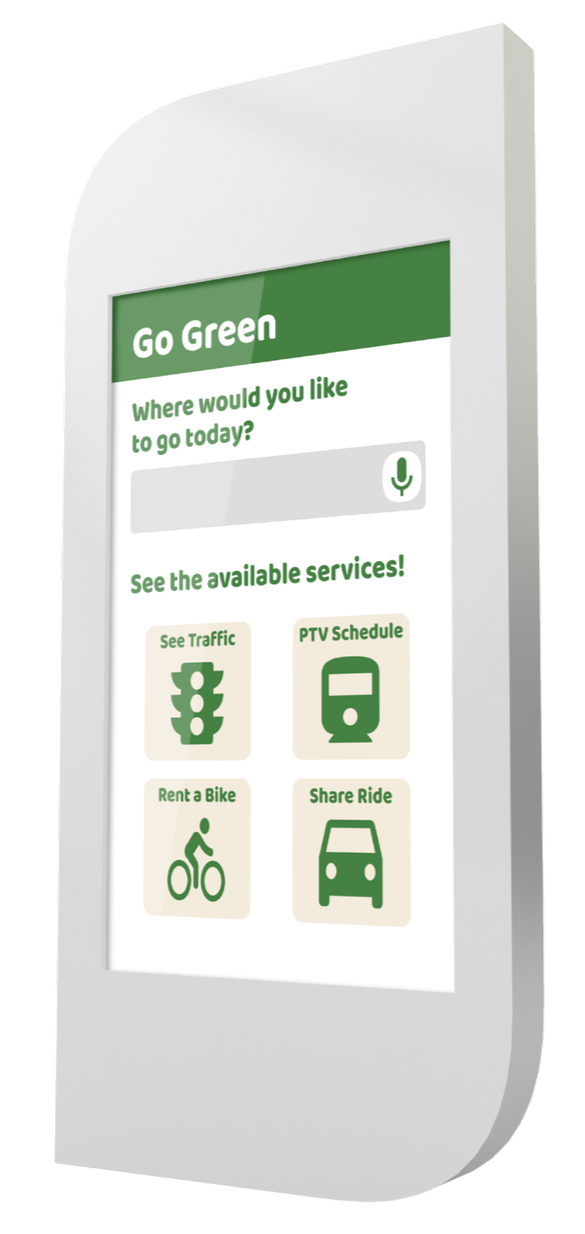
We developed scenarios illustrating current, negative, and future commuting experiences. One scenario showed Abby’s bike breaking down, leaving her stranded when a tram was delayed without real-time updates. Another scenario depicted George stuck in traffic despite planning his route using a navigation app. In the ideal scenario, Lidia used a touchscreen at a train station to access real-time schedules, crowding data, and route suggestions, allowing her to travel efficiently and safely.
Our team explored multiple design concepts, including a mobile app for AI-driven route optimization, gamified incentives for sustainable transport, and assistive interfaces for elderly users. Early sketches and low-fidelity prototypes visualized integrated transport modes and reward systems, while team brainstorming sessions expanded our range of ideas.
Iteration & design
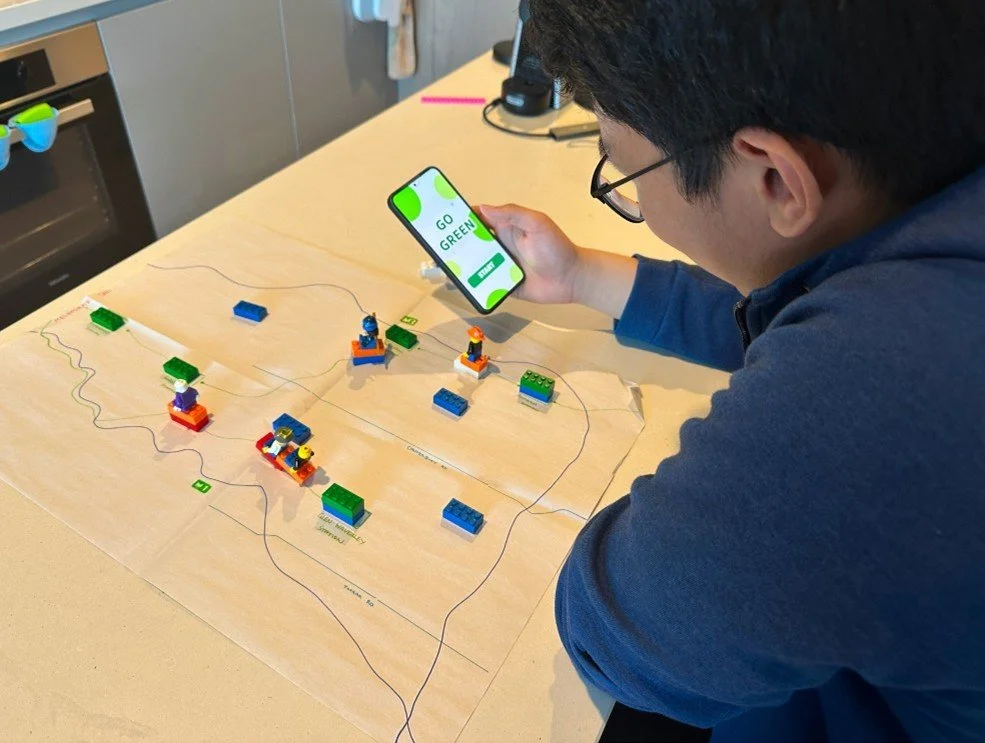
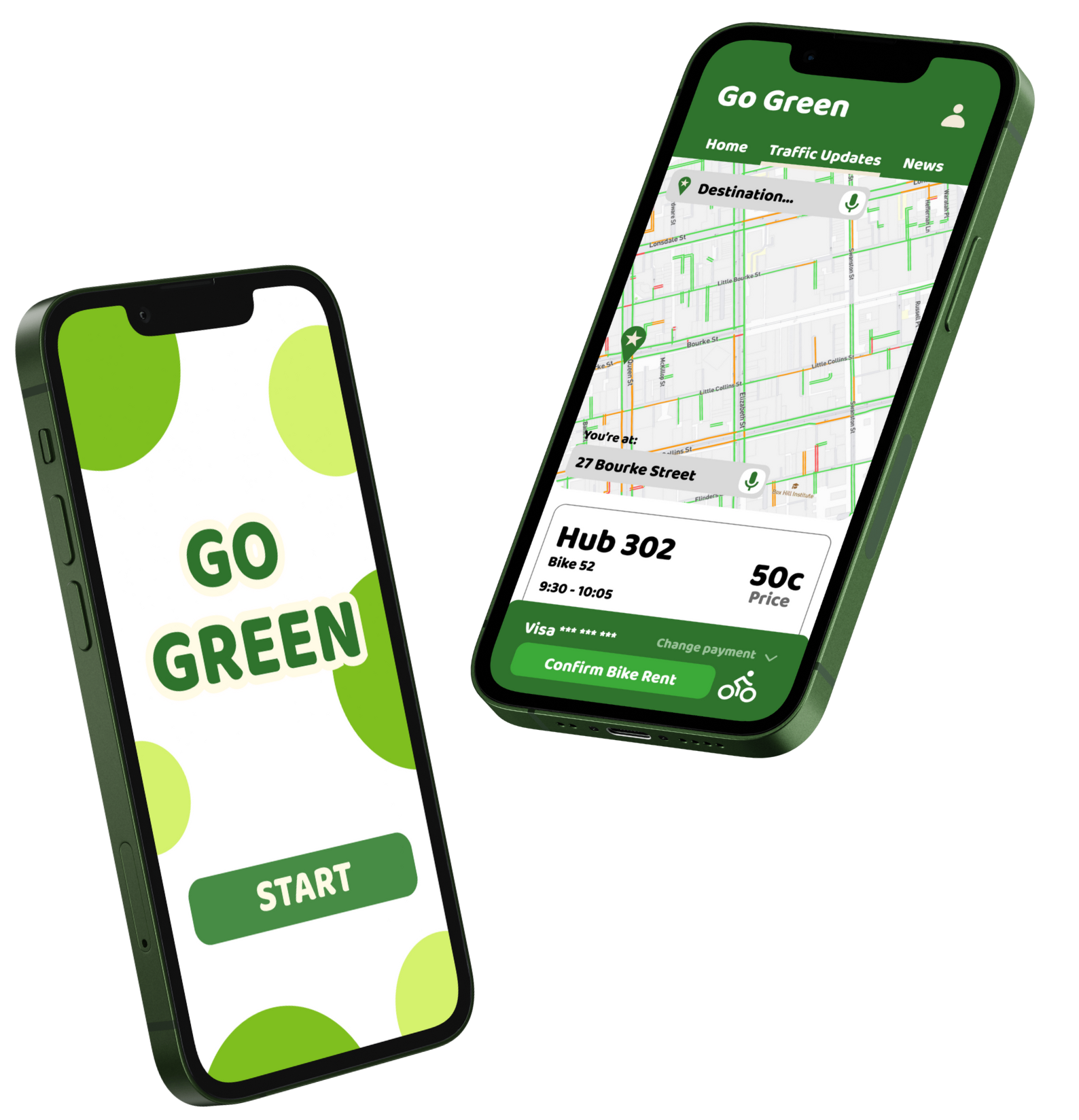
Pilot testing with users from our target audience, using scenario-based models and task assignments, revealed valuable insights. Commuters highlighted the importance of real-time updates, route suggestions, and integrated transport options. Older participants appreciated touchscreen interfaces that simplified trip planning, while active commuters responded positively to the gamified reward system. This feedback directly informed improvements such as enhanced first- and last-mile connectivity through bike rentals and ride-share hubs, streamlined app navigation, and a more balanced points allocation system.
Solution
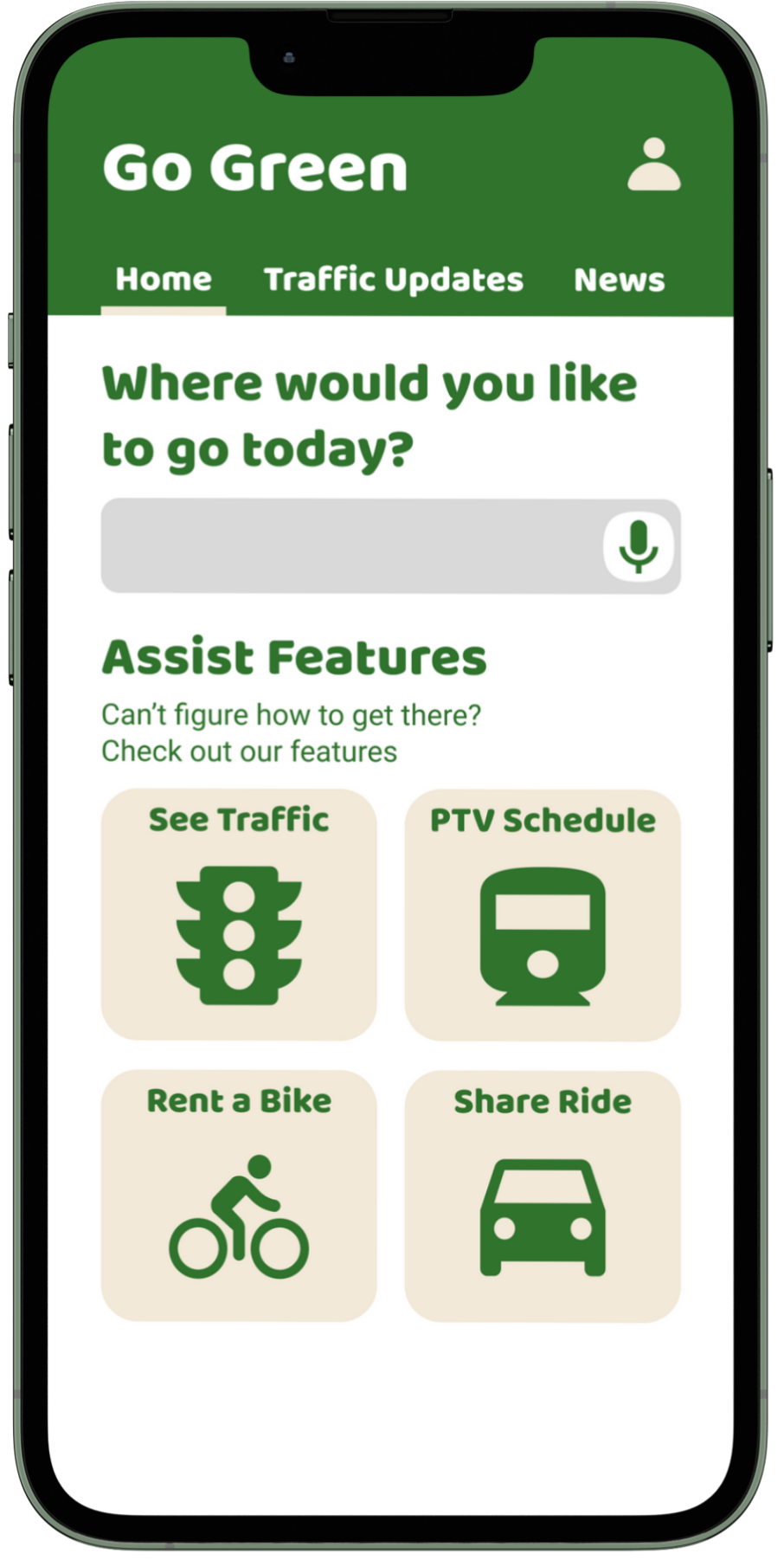
The final Urban Flow solution combines a mobile app with physical touchpoints at transport hubs. The app offers AI-powered route optimization, environmental impact ratings, real-time schedule updates, and points-based rewards. Station screens provide guidance for first- and last-mile connectivity, as well as real-time crowding and schedule information.
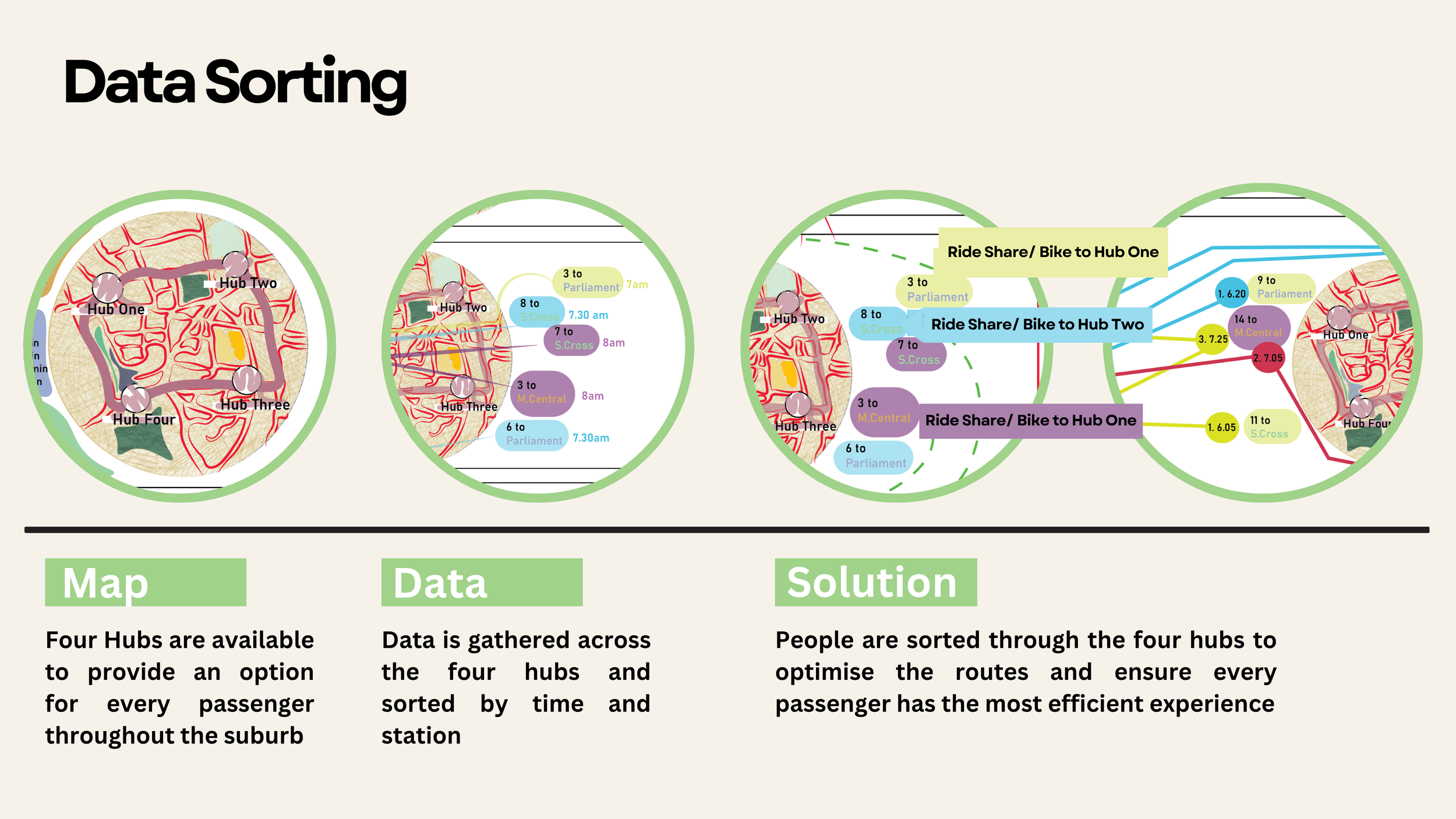
A points-based rewards system encourages commuters to choose environmentally friendly options, while assistive technology ensures accessibility for elderly or less tech-savvy users. Four transport hubs support equitable distribution of resources, and crowd-sourced updates allow users to report incidents, improving overall system reliability.
Final outcomes
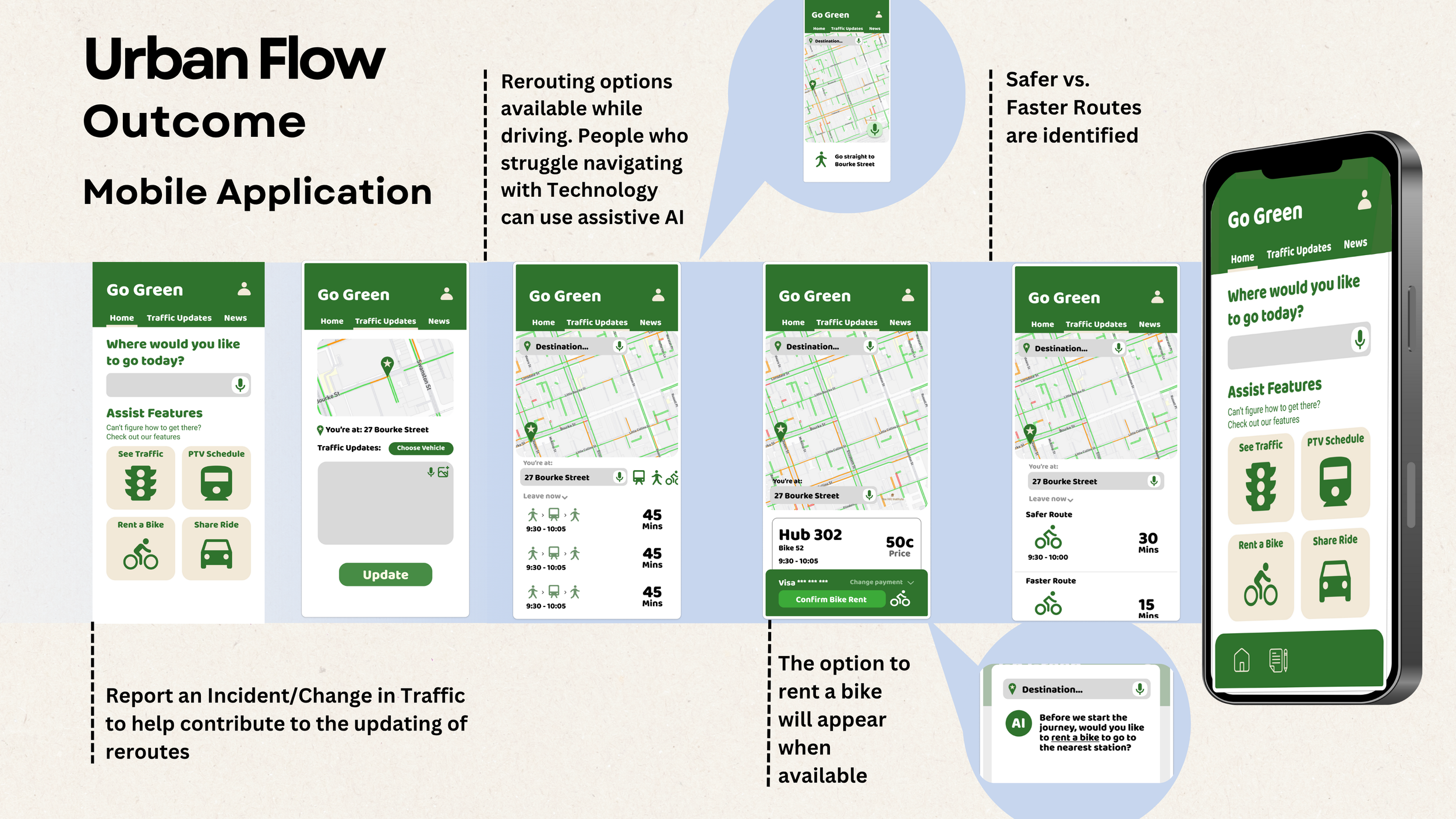
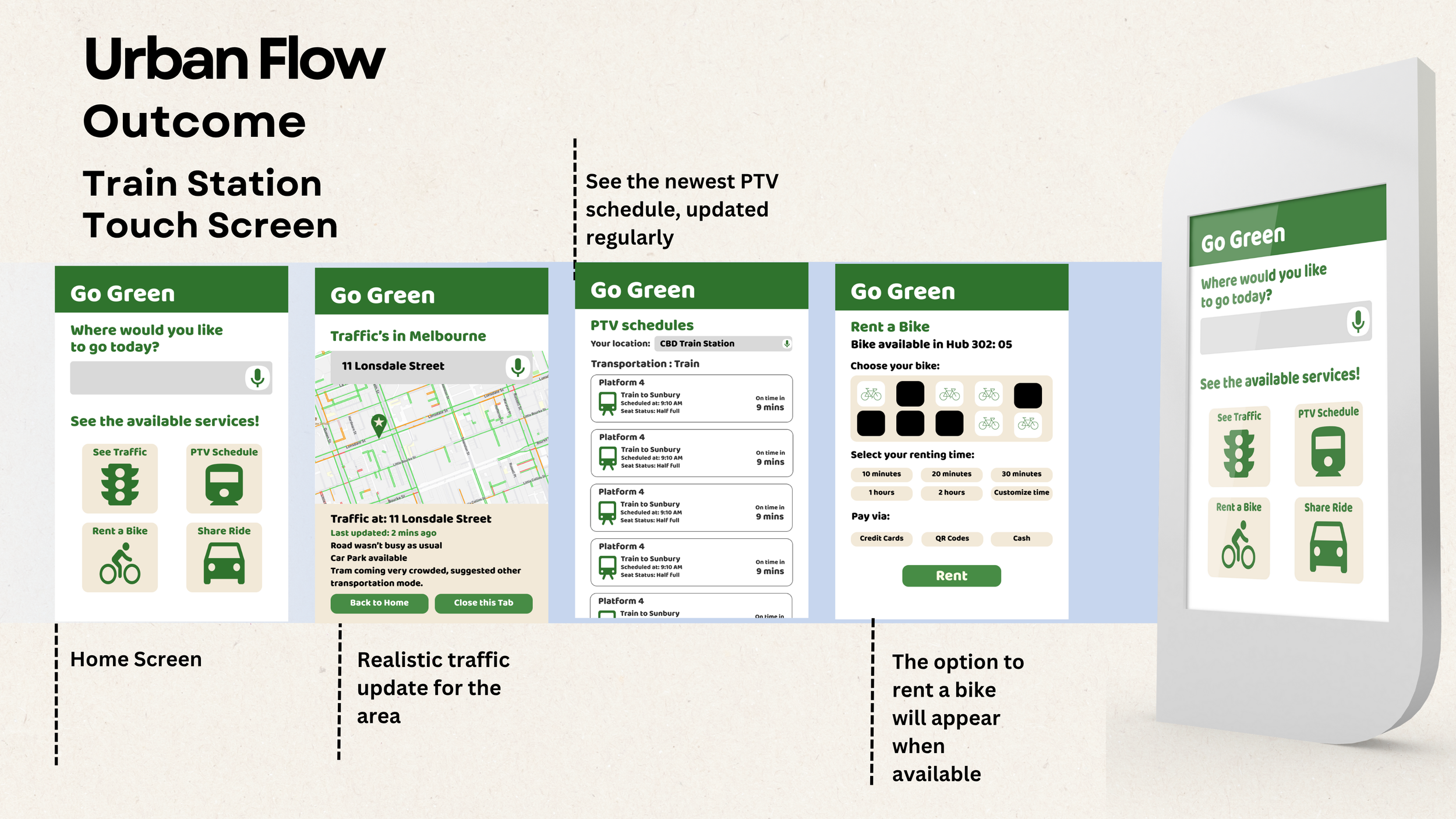
Beyond individual users, Urban Flow promotes community and environmental benefits. Encouraging cycling and walking supports public health, while improved access to public transport strengthens social connectivity. The solution demonstrates how thoughtful UX and service design can create meaningful, sustainable urban mobility solutions.
Reflection
This project reinforced the importance of understanding diverse user needs and combining digital and physical touchpoints to design holistic solutions. Iterative prototyping and continuous feedback were crucial for refining features and maximizing usability. Incentive systems proved effective in encouraging sustainable behavior.
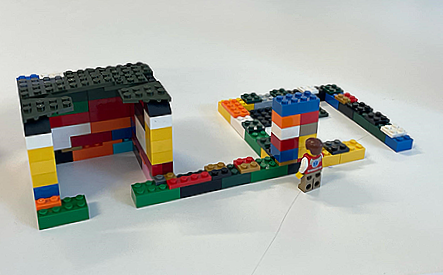
The initial testing included small models with the use of Legos, this helped visualize the system for participants.
My Role
Project management: Organised deadlines and milestones to keep the team on track.
Team leadership: Delegated tasks, monitored progress, and checked in with members to support collaboration.
UX/UI design: Developed personas, user journeys, and sketches for presentation storytelling.
Visual design: Created imagery and layouts for slides, including conceptual UI screens.
Incentive model: points + lower fares encourage public transport uptake.
Systems map: integration across hubs to sort passengers and optimise flow.
Four key personas were the main archetypes that are affected by Melbourne’s transport infrastructure.
A journey map to help find touch-points, opportunities and pain points.
*An example of one the journey maps that illustrate and also further humanize and empathize our users.